
‘There is only one Moise Kouame’: 17-year-old shining in major debut
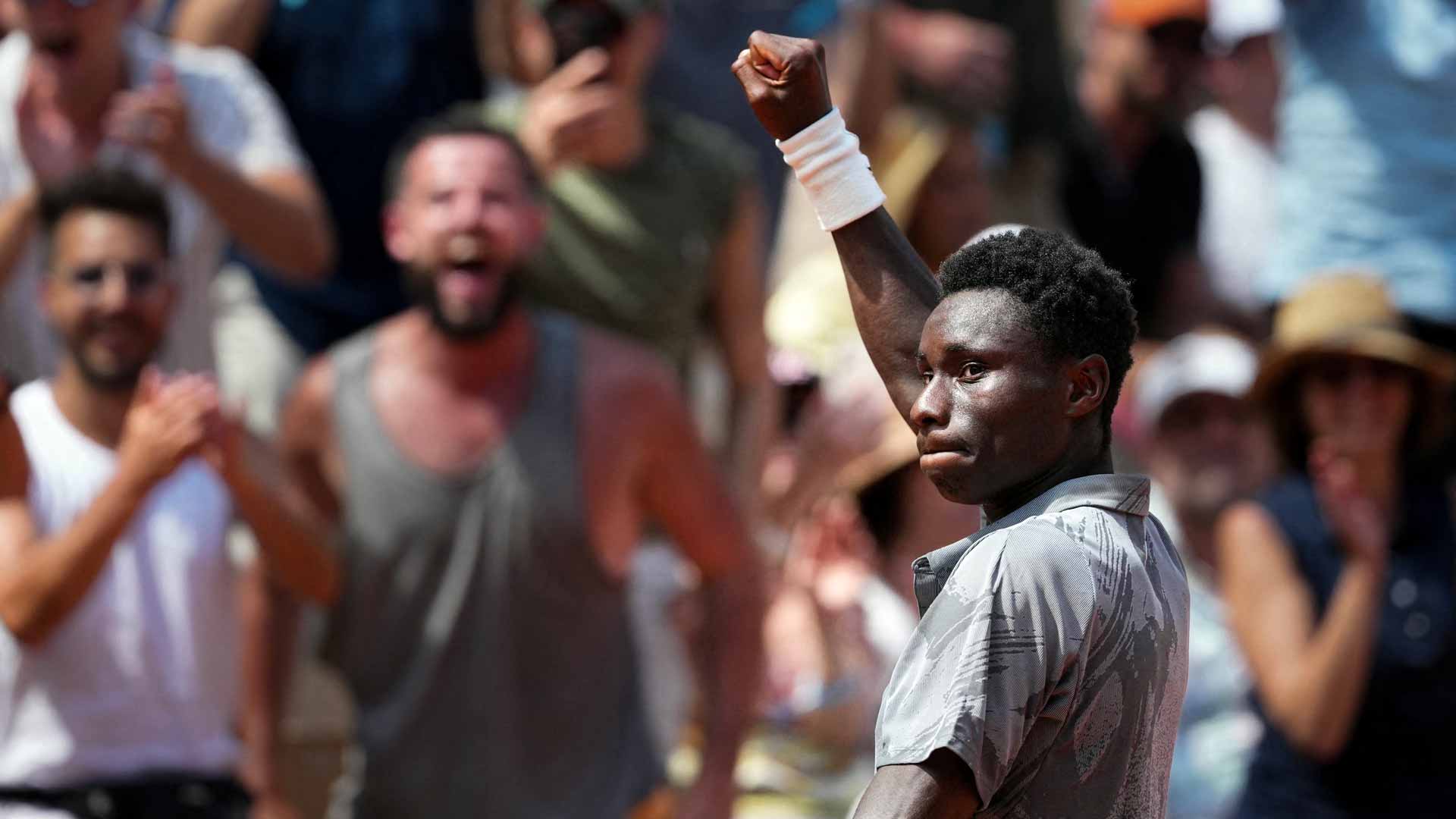
Moise Kouame is turning heads at his home Slam, Roland Garros, where the 17-year-old became the youngest male player to reach the third round of a major since Rafael Nadal in 2003.
In his major main-draw debut, the #NextGenATP star has earned two memorable wins. Beginning his campaign by ousting Tour-veteran and 2022 semi-finalist Marin Cilic, Kouame followed that victory by securing his first five-set win Thursday in a four-hour, 56-minute battle against Adolfo Daniel Vallejo.
Kouame’s coach, Liam Smith, is proud of the teenager’s progress.
“I think, first of all, 17 years old, to play five hours, five sets, final-set tiebreak, and to physically and mentally stay together, I think it's extremely impressive and it shows a lot of the inner qualities that Moise has as a competitor,” said Smith. “Talent is not just physical or technical, it's also mental.
“The way he came back in the fifth set, it's highly impressive,” he added, speaking of Kouame’s rally from 2-5 in the decider. “It's unusual for a young player of this age, and in this kind of an arena to be able to do that and physically play for five hours.”
The clay-court major began with 21 French players in the Round of 128. Now, Kouame, the No. 318 player in the PIF ATP Rankings, and World No. 90 Quentin Halys are the only remaining Frenchmen in the draw.
Kouame began the year at World No. 833 and has made rapid progress. He made his tour-level debut as a qualifier at the ATP 250 in Montpellier and earned his first ATP Tour win in Miami. His victory over Cilic marked just the second tour-level win of his career, a result coming against a 37-year-old who has amassed more than 600 match wins in the past two decades.
Kouame’s growing composure on court has played a key role in his breakthrough.
“I think he's very strong mentally as a tennis player,” said Smith. “It's always a transition when you move from being a young player from the juniors or the lower-tier events to the bigger stages. You see a lot of what I would call rookie mistakes or junior mistakes or lapses of concentration or lapses of intensity.
“That's something we have been working on a lot for the last month or so, is just to improve the ability to stay more disciplined, more focused.”
Smith, an ATP Coach member, has coached a list of names, including another Frenchman in Gael Monfils, who this week put a bow on his Roland Garros career. It may be easy to draw comparisons between Kouame and Monfils, who also excelled at age 17, winning the Roland Garros boys’ singles event in 2004. But Smith believes every player must be viewed on their own terms.
“I always said this before when I worked with Gael: There is only one Gael Monfils. I think it's safe to say there is only one Moise Kouame,” said Smith. “They are different people. They have slightly different personalities. Yes, you're going to draw similarities, but for me, I don't like to compare. I like to look at every player individually and say, ‘Okay, what can we do to help that player maximise what they have?’”
Away from the court, Kouame is a lighthearted teen who is maintaining a balanced approach to life on Tour.
“He's a great kid. He has a lot of personality and he enjoys to joke,” said Smith. “We share some similar interests in other things outside of tennis, as well, which is fun. He loves Formula 1. So do I. He's hard-working, but he understands and he has the ability to balance. We have some tough training sessions, but we're still having some fun, which is very important with a 17-year-old.
“It's a long journey ahead. This is a fantastic start, but it's a long road.”
Up next for Kouame is Alejandro Tabilo. Should he defeat the World No. 36, Kouame would make his Top 200 debut. And this is only the beginning of the French star, who is seeking to qualify for the Next Gen ATP Finals for the first time.
“I think there is potential everywhere,” said Smith when asked about what Kouame can improve. “Improving his serve I think is something that's important for the future. He has a very good serve. But it can improve in the quality, the consistency, and the efficiency. And his forehand can become a bigger and bigger weapon. You saw today he's already starting to be a little more aggressive with it and play a little faster. I think there is a lot of areas he can improve there, as well.”
